In 2026, tokenized single-family homes stand at the forefront of real estate innovation, transforming how everyday investors access premium properties through fractional ownership real estate tokens. Platforms now enable purchases starting at $50, delivering daily rental income via stablecoins while enhancing liquidity on blockchain networks. This shift democratizes markets once reserved for high-net-worth individuals, with tokenized assets surpassing $130 million in value across leading providers.
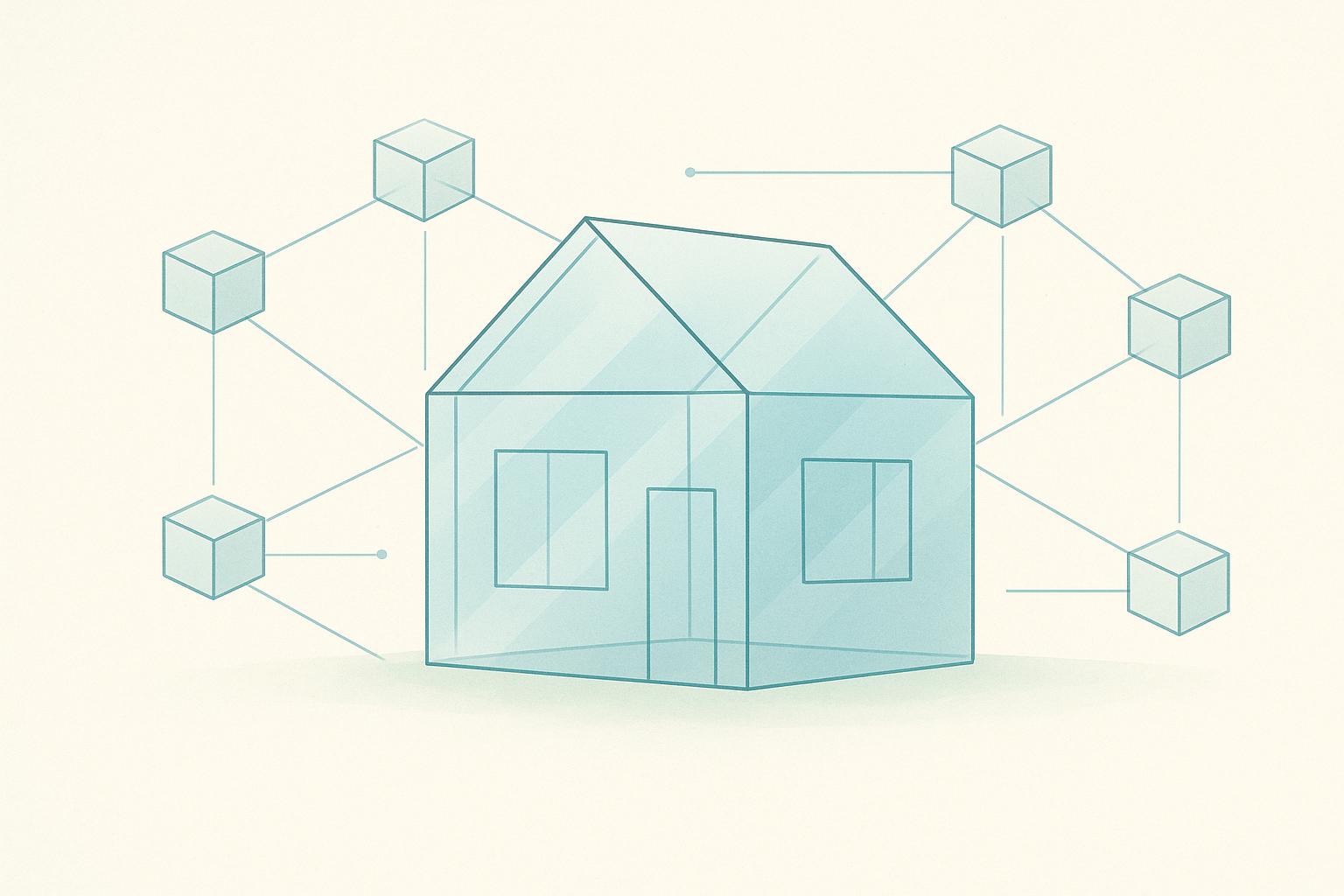
Analysts project real estate tokenization to reach $4 trillion by 2026, driven by fractional models that slice high-value single-family rentals into tradable tokens. Investors benefit from passive yields, governance rights, and secondary market sales, all secured by smart contracts on Ethereum and other chains. Deloitte forecasts tokenized private real estate funds hitting $1 trillion by 2035, underscoring the momentum in tokenized property platforms 2026.
Why Blockchain Secures Fractional Single-Family Ownership
Traditional fractional ownership often falters under paperwork burdens and illiquidity traps. Blockchain flips this script: tokens represent precise property shares, with rental cash flows automated via oracles. Platforms prioritize real estate RWA single family assets, ensuring compliance through U. S. legal wrappers and KYC protocols. Yields average 8-12% annually, outpacing many bonds, while global access eliminates geographic barriers. In my view, this fusion of TradFi fundamentals and DeFi efficiency positions blockchain home investments as a portfolio staple for risk-adjusted returns.
Security tokens comply with Reg D and Reg S, mitigating risks that plague unregulated schemes. Platforms audit smart contracts and insure against hacks, fostering trust. Yet, investors must scrutinize platform track records; longevity signals resilience amid regulatory flux.
RealT Leads with Proven U. S. Rental Tokenization
RealT dominates tokenized single family homes, tokenizing over 700 U. S. properties by late 2025, totaling more than $130 million in assets. Investors buy fractions from $50, earning daily USDC payouts from rents. Operating on Ethereum, RealT streamlines via Gnosis Chain for low fees. Its model excels in Midwest and Southern markets, where cap rates hit double digits. Data shows consistent 10-15% yields, bolstered by property management expertise. For those eyeing stable fractional ownership real estate tokens, RealT offers a battle-tested entry.
Lofty Empowers with Governance and Liquidity
Lofty. ai challenges incumbents by tokenizing 170 and properties across 11 states, distributing over $2 million in rents by mid-2025. Minimums start at $50, with instant secondary market liquidity via its DEX. Token holders vote on maintenance and sales, aligning incentives uniquely. Daily yields in USDC average 9-11%, appealing to hands-off investors. Lofty’s focus on cash-flowing single-family rentals underscores its edge in volatile markets.
Comparison of RealT and Lofty
| Platform | Minimum Investment | Properties Tokenized | Average Yield | Chain Used | Total Assets/Income |
|---|---|---|---|---|---|
| RealT | $50 | Over 700 | Daily rental income in USDC | Ethereum | Over $130 million (assets) |
| Lofty | $50 | Over 170 | Daily rental yields | Algorand | Over $2 million (rental income) |
Propy advances the field with AI-enhanced valuations, facilitating $4 billion in transactions by 2025. Its platform tokenizes single-family homes for seamless fractional trades, integrating title transfers on-chain. While yields vary, Propy’s liquidity and global reach shine for diversified exposure.
Zoniqx and Blocksquare Scale Global Access
Zoniqx emerges as a versatile tokenized property platforms 2026 contender, supporting single-family tokenization with modular tools for issuers. It emphasizes compliance across jurisdictions, enabling fractional shares in U. S. and European homes. Blocksquare complements this via its real estate protocol, powering marketplaces for tokenized single-family assets. Both platforms lower barriers, with entry points under $100, and integrate yield farming for enhanced returns. Their infrastructure supports the next wave of real estate RWA single family growth, prioritizing interoperability across chains.
Elysian distinguishes itself by tokenizing high-end single-family homes, targeting investors seeking premium blockchain home investments with superior appreciation potential. The platform specializes in coastal and urban residences, fractionally owning properties that blend lifestyle appeal with rental yields. By leveraging Polygon for scalability, Elysian ensures low-cost transactions and rapid settlements. Investors access shares from $100, participating in governance for upgrades like renovations. Early data indicates 12-18% compounded returns, driven by selective property curation and AI-optimized pricing models. This positions Elysian as a gateway for those prioritizing quality over volume in tokenized single family homes.
SolidBlock: Enterprise-Grade Tokenization Infrastructure
SolidBlock rounds out the leaders with its robust infrastructure for tokenized single-family portfolios. Focused on institutional compliance, it powers fractional ownership through SEC-registered security tokens, appealing to accredited investors globally. Minimums hover around $5,000, reflecting its emphasis on diversified funds backed by single-family rentals in growth corridors. Yields stabilize at 8-10%, with automated distributions and robust secondary markets on its exchange. SolidBlock’s track record includes multimillion-dollar raises, underscoring reliability in a maturing sector. For fundamental analysts, its audited reserves and transparent cap tables exemplify disciplined fractional ownership real estate tokens.
Comparing these platforms reveals distinct strategies: RealT and Lofty excel in accessibility for retail investors, while Propy and Zoniqx prioritize transactional efficiency. Blocksquare and SolidBlock cater to scalable issuance, and Elysian adds a luxury tilt. Across the board, minimum investments range from $50 to $5,000, with yields clustering at 8-15% amid U. S. -centric portfolios. Blockchain choices like Ethereum, Polygon, and custom chains ensure interoperability, while liquidity via DEXs and OTC desks addresses traditional pain points.
Regulatory evolution bolsters this ecosystem. As of early 2026, platforms adhere to Reg D exemptions, with several pursuing Reg A and for broader retail access. Smart contract audits from firms like Certik mitigate exploits, and stablecoin payouts shield against volatility. Yet, challenges persist: oracle dependencies for rent data demand vigilance, and macroeconomic shifts could pressure cap rates. Investors should allocate 5-10% of portfolios to these real estate RWA single family assets, balancing yields with diversification.

Looking ahead, interoperability standards like ERC-3643 will unify secondary markets, amplifying liquidity for tokenized property platforms 2026. Platforms integrating AI for predictive maintenance promise yield compression toward 10% baselines, outstripping inflation. For discerning investors, these seven leaders offer a spectrum of entry points, grounded in verifiable cash flows and blockchain immutability. Fundamentals dictate selecting based on risk tolerance: low-minimum yield plays for beginners, compliant structures for institutions. This sector’s trajectory affirms real estate’s blockchain renaissance, rewarding patient capital with asymmetric upside.
About the Author