
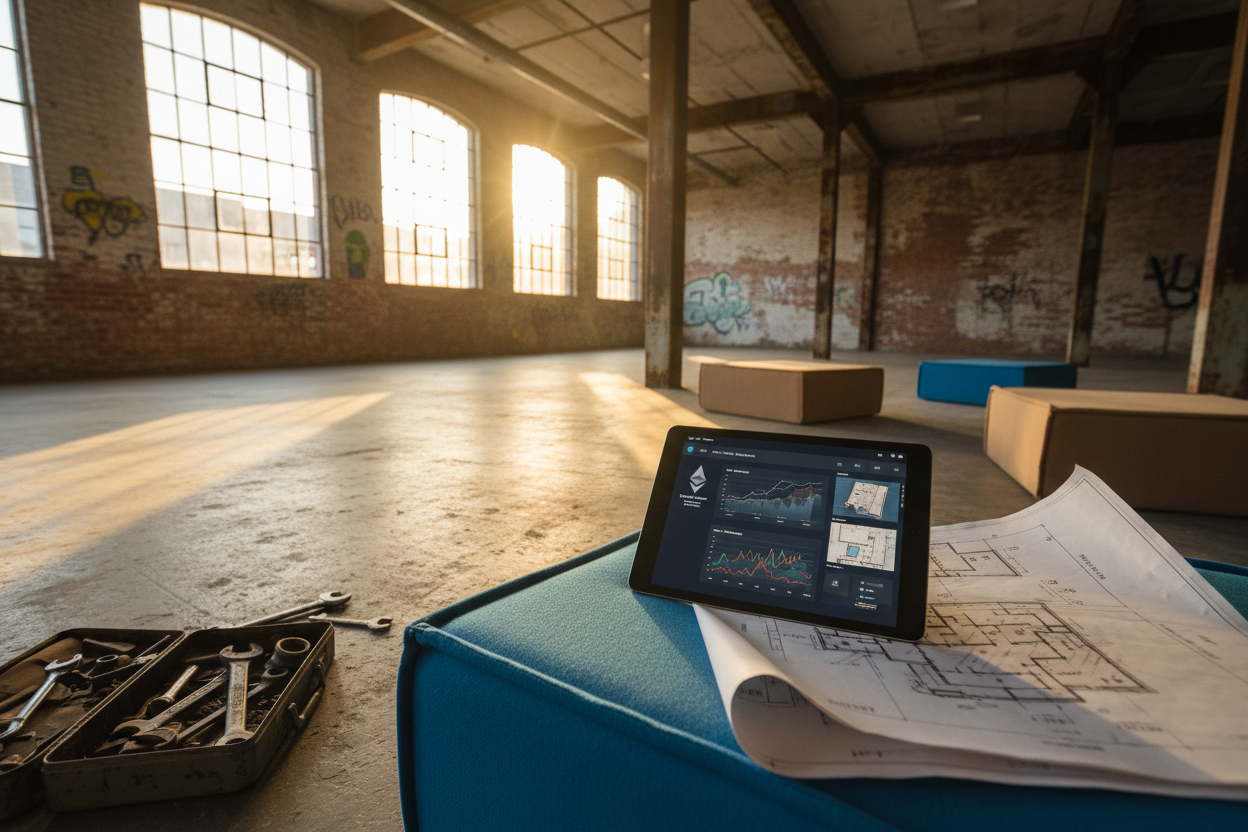
In the evolving landscape of decentralized finance, tokenized industrial warehouses stand out as a bridge between tangible real estate assets and high-yield blockchain strategies. With Ethereum's native token ETH trading at $2,449.26, up 4.50% in the last 24 hours, the network's robustness supports innovative applications like RWA yield farming Ethereum. Industrial properties, fueled by e-commerce logistics demands, offer steady rental income that, once tokenized, can fuel sophisticated yield farming on Ethereum in 2026.
The tokenized real estate sector has surged, boasting a global market cap exceeding $3.7 billion in 2025 alongside a 21% CAGR. Projections from McKinsey point to the broader RWA tokenization market hitting $2 trillion by 2030. Industrial warehouses, with their predictable cash flows from long-term leases to logistics giants, represent a prime candidate for this shift. Tokenization democratizes access, slicing ownership into fractional warehouse property tokens tradable on-chain.
Why Industrial Warehouses Excel in Tokenization
Industrial real estate outperforms other classes in tokenization suitability due to its low volatility and high occupancy rates, often exceeding 95% in key markets. Unlike residential properties prone to consumer cycles, warehouses benefit from structural tailwinds: global supply chain reshoring and the explosion of same-day delivery services. In 2026, as blockchain adoption matures, these assets will integrate seamlessly into DeFi, where investors deploy tokens into automated vaults for compounded returns.
Consider the mechanics: a $50 million warehouse in a logistics hub undergoes valuation by certified appraisers, then legal wrapping via SPVs to ensure compliance. Smart contracts on Ethereum mint ERC-20 or ERC-721 tokens representing fractional shares, backed by on-chain oracles for rental income distribution. This setup not only enhances liquidity but positions tokens for Ethereum real estate yield farming 2026, where stability meets DeFi's multiplicative yields.
Navigating the Tokenization Pipeline
The process demands precision. First, asset selection favors warehouses with strong fundamentals: prime locations near ports or urban centers, diversified tenant bases, and ESG-compliant operations. Legal structuring follows, often as Delaware LLCs or Cayman SPVs, isolating risk while satisfying KYC/AML via platforms like Centrifuge or RealT.
Token issuance leverages Ethereum's layer-2 solutions for cost efficiency, with upgrades like Dencun reducing fees below $0.01 per transaction. Investors acquire tokens through primary offerings or secondary DEXs, then direct them toward yield optimization. Yield farming here diverges from volatile crypto pairs; instead, warehouse tokens pair with stables in curated pools, mitigating impermanent loss while capturing rental yields plus protocol incentives.
| Stage | Description | Key Benefit |
|---|---|---|
| Valuation | Independent appraisal | Transparent pricing |
| SPV Setup | Legal entity formation | Risk isolation |
| Token Mint | Smart contract deployment | Fractional ownership |
| DeFi Integration | Liquidity provision | Yield generation |
Yield Farming Mechanics with Warehouse Tokens
DeFi vaults, autonomous smart contracts, ingest tokenized warehouses and execute strategies like lending on Aave or liquidity provision on Uniswap V4. Picture depositing warehouse property tokens into a vault that auto-compounds rental distributions into additional positions, targeting 8-12% APY from real yields augmented by ETH-denominated rewards.
This fusion addresses DeFi's oracle risk through hybrid models: Chainlink feeds verify off-chain rents, while on-chain governance fine-tunes risk parameters. In 2026, with Ethereum's price at $2,449.26 underscoring network health, such strategies appeal to conservative allocators seeking uncorrelated returns. Diversification remains key; blend warehouse tokens across jurisdictions to hedge regulatory variances.
Ethereum (ETH) Price Prediction 2027-2032: Tokenizing Industrial Warehouses for Yield Farming
Forecasts driven by RWA tokenization growth, DeFi integration, and Ethereum's role in real-world asset liquidity and yield generation (baseline: $2,500 in 2026)
| Year | Minimum Price | Average Price | Maximum Price | YoY % Change (Avg) |
|---|---|---|---|---|
| 2027 | $3,000 | $4,500 | $6,500 | +80% |
| 2028 | $4,200 | $6,800 | $10,500 | +51% |
| 2029 | $5,500 | $9,200 | $14,000 | +35% |
| 2030 | $7,000 | $12,000 | $18,500 | +30% |
| 2031 | $9,000 | $15,500 | $24,000 | +29% |
| 2032 | $11,500 | $20,000 | $31,000 | +29% |
Price Prediction Summary
Ethereum prices are projected to experience robust growth from 2027-2032, fueled by RWA tokenization of industrial warehouses enabling fractional ownership and DeFi yield farming. Average prices could climb from $4,500 in 2027 to $20,000 by 2032, with maximums reaching $31,000 in bullish scenarios amid market cycles, regulatory tailwinds, and network upgrades.
Key Factors Affecting Ethereum Price
- Surge in RWA tokenization, with real estate market cap exceeding $3.7B in 2025 and targeting $2T by 2030 per McKinsey
- Enhanced DeFi vaults and liquidity pools for tokenized warehouses, increasing ETH utility and gas demand
- Ethereum scalability improvements supporting high-volume RWA and yield farming transactions
- Favorable regulatory developments for tokenized assets and stablecoins
- Bullish market cycles with institutional inflows and historical halving-like catalysts
- Competition from L2s managed via Ethereum's Layer 1 dominance in RWAs
Disclaimer: Cryptocurrency price predictions are speculative and based on current market analysis. Actual prices may vary significantly due to market volatility, regulatory changes, and other factors. Always do your own research before making investment decisions.
Early adopters report blended yields surpassing traditional REITs, as tokenization slashes intermediaries. Yet success hinges on platform selection; vetted RWA protocols like those topping 2026 vendor lists prioritize audited contracts and proven track records.
Platform choice separates viable opportunities from speculative traps. In 2026, leading RWA tokenization platforms emphasize robust security audits, transparent governance, and seamless DeFi interoperability. Industrial warehouse tokens shine here, their cash flows verified by oracles like Chainlink, ensuring yields reflect actual rental performance rather than inflated projections.
Risks in RWA Yield Farming and How to Navigate Them
Tokenized warehouses offer compelling risk-adjusted returns, yet DeFi's complexities demand vigilance. Primary concerns include oracle failures, where off-chain data discrepancies could misprice yields; smart contract vulnerabilities, despite audits; and regulatory shifts across jurisdictions. Liquidity risks loom in nascent secondary markets, potentially amplifying drawdowns during stress events. My view: these pale against real estate's inherent stability, provided investors layer protections like diversified pools and hardware wallets.
Key Risks & Mitigations
- Regulatory Risk: Tokenized RWAs may face securities classification issues across jurisdictions. Mitigation: Use SPVs and compliant platforms like Centrifuge adhering to regulations like EU MiCA.
- Smart Contract Risk: Vulnerabilities in yield farming contracts. Mitigation: Conduct audits by established firms such as Certik or OpenZeppelin.

- Oracle Risk: Manipulation or failure of price feeds for warehouse valuations. Mitigation: Integrate decentralized oracles like Chainlink.

- Custody Risk: Off-chain issues with physical industrial warehouses. Mitigation: Employ insured custodians and regular audits of assets.

- Liquidity Risk: Illiquidity in tokenized asset pools on Ethereum. Mitigation: Incentivize via liquidity mining on Uniswap or Balancer.

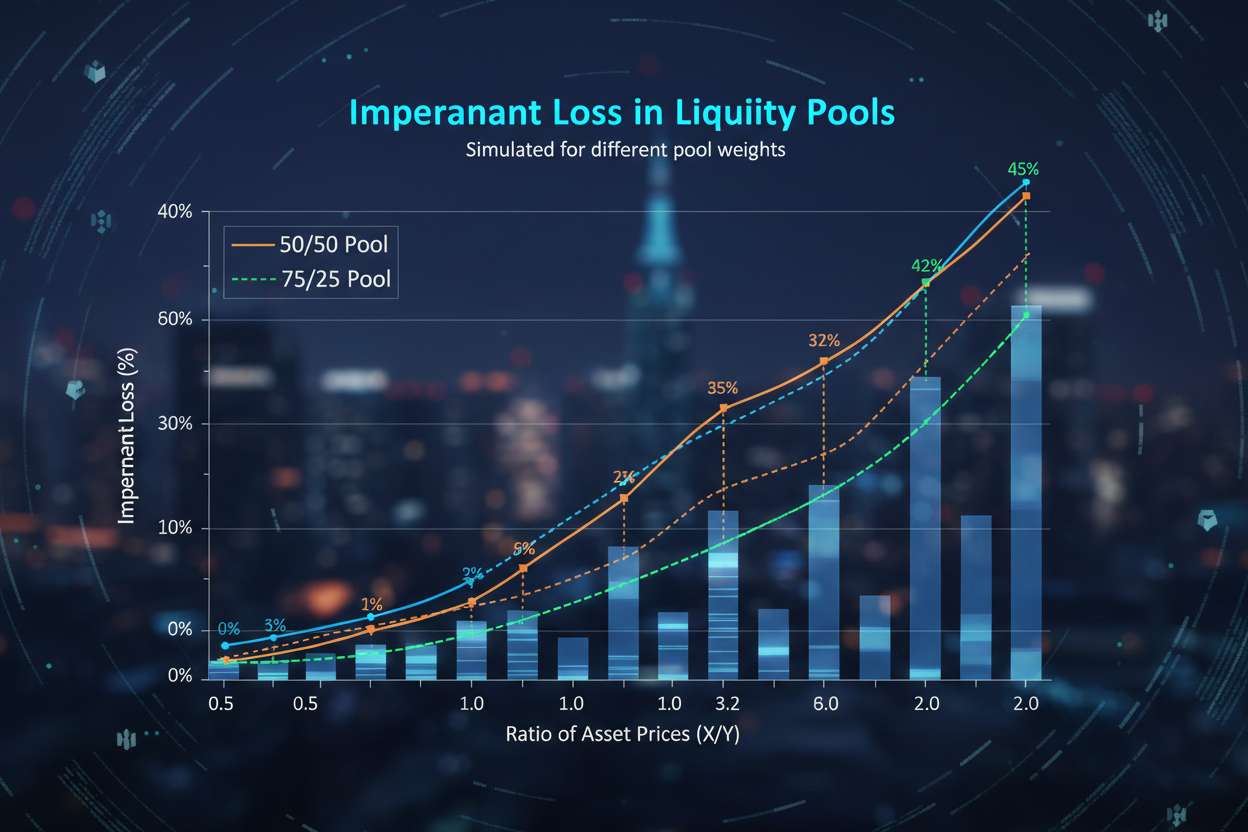
- Impermanent Loss: Losses from price volatility in AMM yield farming. Mitigation: Opt for stablecoin-paired pools or single-sided staking vaults.
Regulatory clarity is advancing, with frameworks in the EU's MiCA and U. S. pilots fostering compliant structures. For warehouse tokens, SPV isolation shields investors from property-specific liabilities, while on-chain governance allows community-driven upgrades. Blended strategies, pairing 70% stable warehouse yields with 30% ETH exposure, have historically delivered Sharpe ratios exceeding 1.5, outpacing vanilla REITs amid Ethereum's $2,449.26 price stability.
Practical Strategies for Maximizing Yields
Optimize by selecting vaults with proven track records, such as those auto-rebalancing across Aave, Compound, and Uniswap. Advanced users employ leveraged positions cautiously, borrowing stables against warehouse collateral to amplify APYs into the mid-teens. Opinion: stick to unlevered base cases initially; the real edge lies in rental yield persistence, not over-optimization prone to liquidation cascades.
Diversification mantra holds: spread across U. S. logistics hubs, European distribution centers, and Asian e-commerce facilities. This hedges geopolitical risks while capturing global lease escalations, projected at 3-5% annually. With tokenized real estate's $3.7 billion 2025 cap growing at 21% CAGR, early positioning in industrial segments positions portfolios for outsized gains as adoption scales.
The 2026 Outlook for Ethereum RWA Yield Farming
Ethereum's ecosystem, bolstered by ETH at $2,449.26 and layer-2 efficiencies, cements its dominance for RWA yield farming Ethereum. Industrial warehouses, with occupancy rates north of 97% in prime corridors, will anchor DeFi's maturation into a trillion-dollar yield machine. Investors blending these assets into vaults report 10-15% blended APYs, fusing real-world ballast with protocol incentives. Forward thinkers will prioritize platforms vetted by on-chain metrics: TVL growth, audit recency, and yield consistency.
Ultimately, tokenized industrial warehouses redefine yield farming by injecting tangible economics into DeFi's alchemy. As Ethereum thrives, these assets deliver uncorrelated income streams, empowering allocators to harvest tomorrow's returns today. Grounded in fundamentals, this convergence promises enduring value in an increasingly on-chain world.


No comments yet. Be the first to share your thoughts!