
Institutional demand drives tokenized real estate
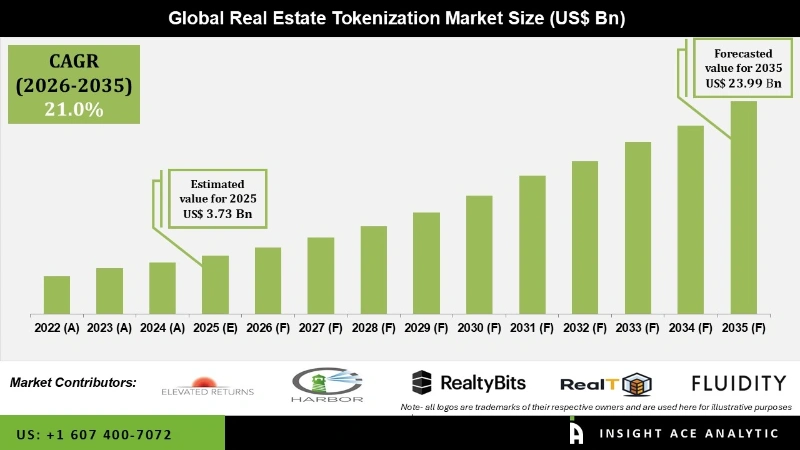
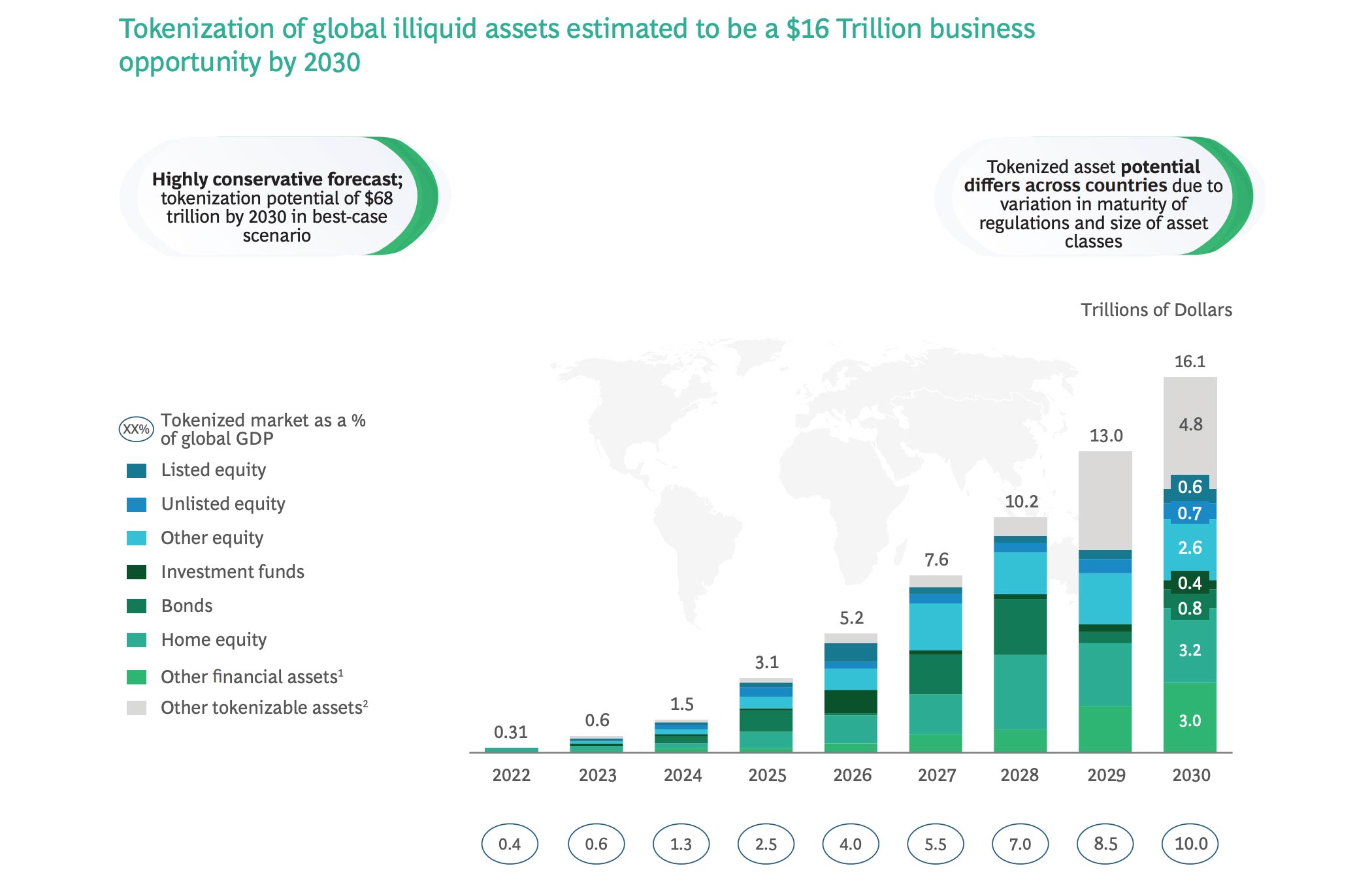
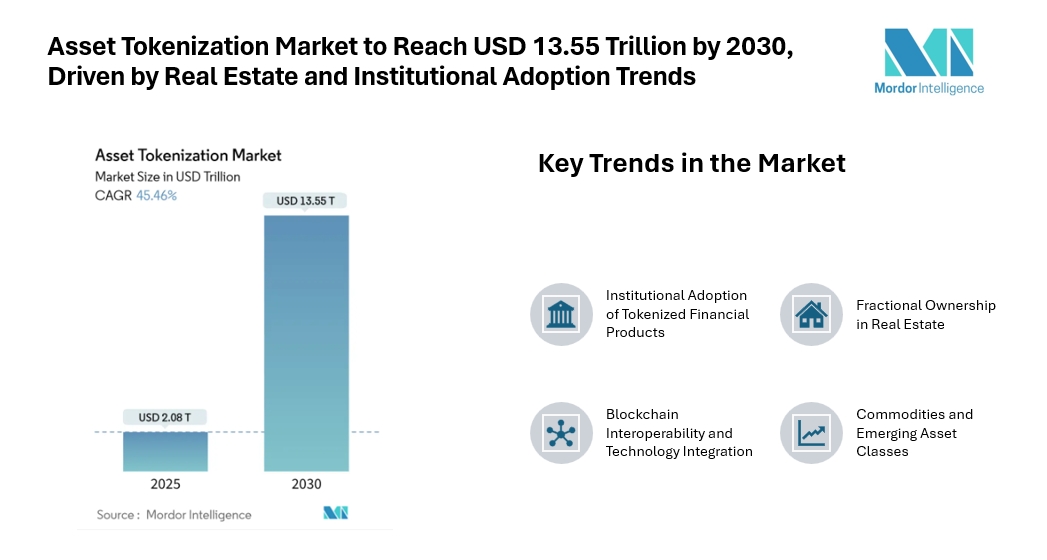
The conversation around real estate tokenization has shifted from speculative retail interest to structured institutional allocation. By 2026, major financial players are treating tokenized assets not as experimental alternatives, but as standard portfolio components. An EY-Parthenon and Coinbase survey indicates that 76% of institutional firms intend to invest in some form of tokenized assets by 2026. This high adoption intent signals a structural shift in how capital is deployed into real estate.
The scale of this capital is substantial. Research from ScienceSoft projects that institutional investors will allocate approximately 5.6% of their portfolios to tokenized assets by 2026. High-net-worth individuals are expected to go further, allocating up to 8.6% of their holdings to these digital instruments. These figures reflect a deliberate strategy to access liquidity and fractional ownership in traditional real estate markets, which have historically been illiquid and capital-intensive.
This institutional credibility is rooted in regulatory clarity and technological maturity. As primary regulatory frameworks solidify across key jurisdictions, the legal risks that once deterred large-scale capital have diminished. The focus is no longer on whether tokenization works, but on how efficiently it can be integrated into existing custody and compliance infrastructure. For institutional allocators, the question is one of timing and execution, not viability.
SEC rules and global compliance frameworks
Regulatory clarity is the primary barrier to entry for real estate tokenization. Issuers must navigate a complex web of securities laws, including US Securities and Exchange Commission (SEC) exemptions like Reg D, Reg S, and Reg A+, alongside jurisdiction-specific requirements. The market shift in 2026 is driven not by technological novelty, but by the institutional standardization of these compliance frameworks.
In the United States, the SEC treats real estate tokens as securities. This classification mandates strict adherence to disclosure requirements and investor accreditation rules. Reg D 506(c) allows for general solicitation but restricts investors to accredited individuals, while Reg A+ offers a "mini-IPO" pathway for broader capital raises, albeit with higher reporting burdens. Reg S governs offerings made outside the US, requiring careful isolation of US persons to avoid violating domestic securities laws.
Globally, frameworks are diverging. The EU's Markets in Crypto-Assets (MiCA) regulation provides a harmonized approach for crypto-assets, though real estate tokens often fall under traditional securities directives depending on their structure. Switzerland and Singapore have established clearer pathways for tokenized assets, fostering innovation while maintaining rigorous anti-money laundering (AML) and know-your-customer (KYC) standards. This regulatory fragmentation requires issuers to build compliance into their token smart contracts from the outset.
The structural reality is that legal compliance dictates market access. Without robust frameworks, fractional ownership remains a niche experiment rather than a mainstream asset class. Institutional adoption hinges on the ability to prove regulatory adherence transparently and automatically.
Platform Comparison for Fractional Property Ownership
The landscape for fractional property ownership is defined by the divergence between institutional-grade infrastructure and retail-accessible liquidity. Selecting a platform requires aligning technical capabilities—specifically token standards and jurisdictional compliance—with the investor’s regulatory status. The following comparison outlines the operational realities of leading platforms as of 2026.
| Platform | Target Audience | Primary Jurisdiction | Token Standard | Min. Investment |
|---|---|---|---|---|
| Zoniqx | Institutional | Global (KYC/AML) | ERC-1400 | $50,000 |
| StgX | Institutional | Global (VASP) | ERC-1400 | $50,000 |
| RealT | Retail | USA (SEC Reg D) | ERC-20 | $50 |
| Lofty AI | Retail | USA (SEC Reg D) | ERC-20 | $10 |
| tZERO | Accredited | USA (SEC Reg A+) | ERC-1400 | $1,000 |
The distinction between these tiers is structural. Institutional platforms like Zoniqx and StgX operate as Virtual Asset Service Providers (VASPs), enforcing strict Know Your Customer (KYC) and Anti-Money Laundering (AML) protocols across multiple jurisdictions. They utilize ERC-1400 standards, which embed compliance logic directly into the token contract, ensuring that transfers only occur between verified wallets. This architecture is essential for high-stakes legal/financial decisions where regulatory liability is paramount.
Conversely, retail-focused platforms such as RealT and Lofty AI prioritize accessibility over global interoperability. They typically rely on SEC Regulation D offerings in the United States, limiting participation to accredited investors or specific geographic regions. While their minimum investment thresholds are significantly lower, the liquidity mechanisms are often more constrained, relying on secondary marketplaces that may have limited depth. The choice between these models dictates not only entry costs but also the ease of asset transfer and regulatory exposure.
AI integration and automated property management
Artificial intelligence is shifting from a supporting role to the central nervous system of tokenized real estate. By 2026, the operational friction that historically plagued digital asset management is being dismantled through automated valuation models (AVMs) and predictive maintenance protocols. This transition is not merely about efficiency; it is about establishing the data integrity required for institutional capital deployment.
Valuation accuracy is the primary beneficiary of this integration. Traditional appraisals are static and often lag behind market shifts. AI-driven AVMs analyze vast datasets—including comparable sales, local economic indicators, and real-time market sentiment—to provide dynamic, near-instant valuations. For tokenized assets, where liquidity depends on transparent pricing, this continuous data stream reduces the information asymmetry between issuers and investors. The World Economic Forum has identified this surge in momentum as a defining trend for 2026, noting that tokenization growth is now inextricably linked to the sophistication of its underlying data infrastructure.
Tenant management and property operations are equally transformed. Smart contracts, when coupled with AI, can automate routine interactions, from lease renewals to maintenance requests. Predictive algorithms analyze building sensor data to forecast equipment failures before they occur, reducing downtime and operational costs. This level of automation ensures that the physical asset backing the token performs consistently, protecting the yield for token holders. As ScienceSoft notes, the convergence of these technologies is redefining how investors perceive risk and return in digital real estate.
The regulatory implication is significant. Automated systems generate immutable audit trails, simplifying compliance with anti-money laundering (AML) and know-your-customer (KYC) requirements. However, this reliance on algorithmic decision-making introduces new risks. Regulators are increasingly scrutinizing the "black box" nature of AI, demanding explainability in how valuations and operational decisions are made. The shift to AI-driven management is not just a technological upgrade; it is a structural change that requires new legal frameworks to ensure accountability and protect investor interests.
Steps to tokenize a real estate asset
Tokenizing real estate requires aligning physical property rights with digital ledger mechanics. Issuers must navigate securities laws, select appropriate legal wrappers, and deploy smart contracts that enforce investor restrictions. The process transforms illiquid property into tradable digital shares, but the regulatory burden remains the primary constraint.
Begin by identifying assets with stable cash flows and clear title history. Issuers conduct rigorous due diligence to verify property valuation, zoning compliance, and tenant leases. This stage establishes the underlying value that tokens will represent, ensuring the digital asset accurately reflects the physical reality.
Select a legal wrapper that complies with local securities regulations. Common structures include Special Purpose Vehicles (SPVs) or Limited Liability Companies (LLCs) that hold the property title. Issuers often target jurisdictions with favorable tokenization laws, such as Switzerland or Singapore, to streamline the registration process with financial authorities.
Develop the token standard (e.g., ERC-3643 or ERC-1400) to enforce compliance rules directly on-chain. These contracts manage investor whitelists, transfer restrictions, and dividend distributions. An independent security audit is mandatory to verify that the code executes legal constraints without vulnerabilities or logic errors.
Integrate identity verification protocols to ensure all token buyers meet Know Your Customer (KYC) and Anti-Money Laundering (AML) standards. Once verified, tokens are minted and distributed to investors. This step finalizes the capital raise, linking each digital token to a verified legal entity in the issuer’s registry.
List the tokens on a regulated Alternative Trading System (ATS) or digital securities exchange to provide liquidity. Issuers must maintain ongoing compliance, including automated dividend payments and regulatory reporting. This phase ensures the tokenized asset remains liquid and compliant throughout its lifecycle.
No comments yet. Be the first to share your thoughts!