
Get tokenized real estate 2026 right
Before committing capital, you need to verify that the platform you choose meets specific legal and structural requirements. Tokenized real estate is not a simple stock purchase; it involves complex layers of regulatory compliance, token standards, and custody arrangements. Skipping these checks can leave you holding digital tokens that have no legal claim to the underlying property.
Start by confirming the legal structure. Legitimate platforms typically use a Special Purpose Vehicle (SPV) or a Real Estate Investment Trust (REIT) to hold the property title. Your tokens represent shares in this entity, not direct ownership of the bricks and mortar. Without this corporate layer, your investment lacks the legal protection needed to claim rental income or property value.
Next, check the token standard and blockchain. Most institutional-grade platforms use Ethereum’s ERC-3643 or similar security token standards, which enforce identity verification (KYC/AML) at the smart contract level. This ensures that only approved investors can hold the tokens, maintaining regulatory compliance. If a platform uses a generic, non-compliant token standard, it likely cannot onboard institutional capital or support secondary market trading.
Finally, verify the liquidity mechanism. Unlike public stocks, tokenized real estate does not always have a built-in exchange. Some platforms offer internal secondary markets, while others rely on third-party brokers or future regulatory frameworks. Understand how you can exit the investment. If there is no clear path to sell your tokens, your "liquid" asset may be just as locked up as traditional real estate.
Work through the steps
Tokenizing real estate is not a single click. It requires a chain of legal, technical, and financial checks that bridge traditional property law with blockchain infrastructure. In 2026, the process is standardized across major platforms, but the underlying mechanics remain complex. Follow this sequence to understand how physical assets become digital tokens and how investors access them.
1. Asset Selection and Legal Structuring
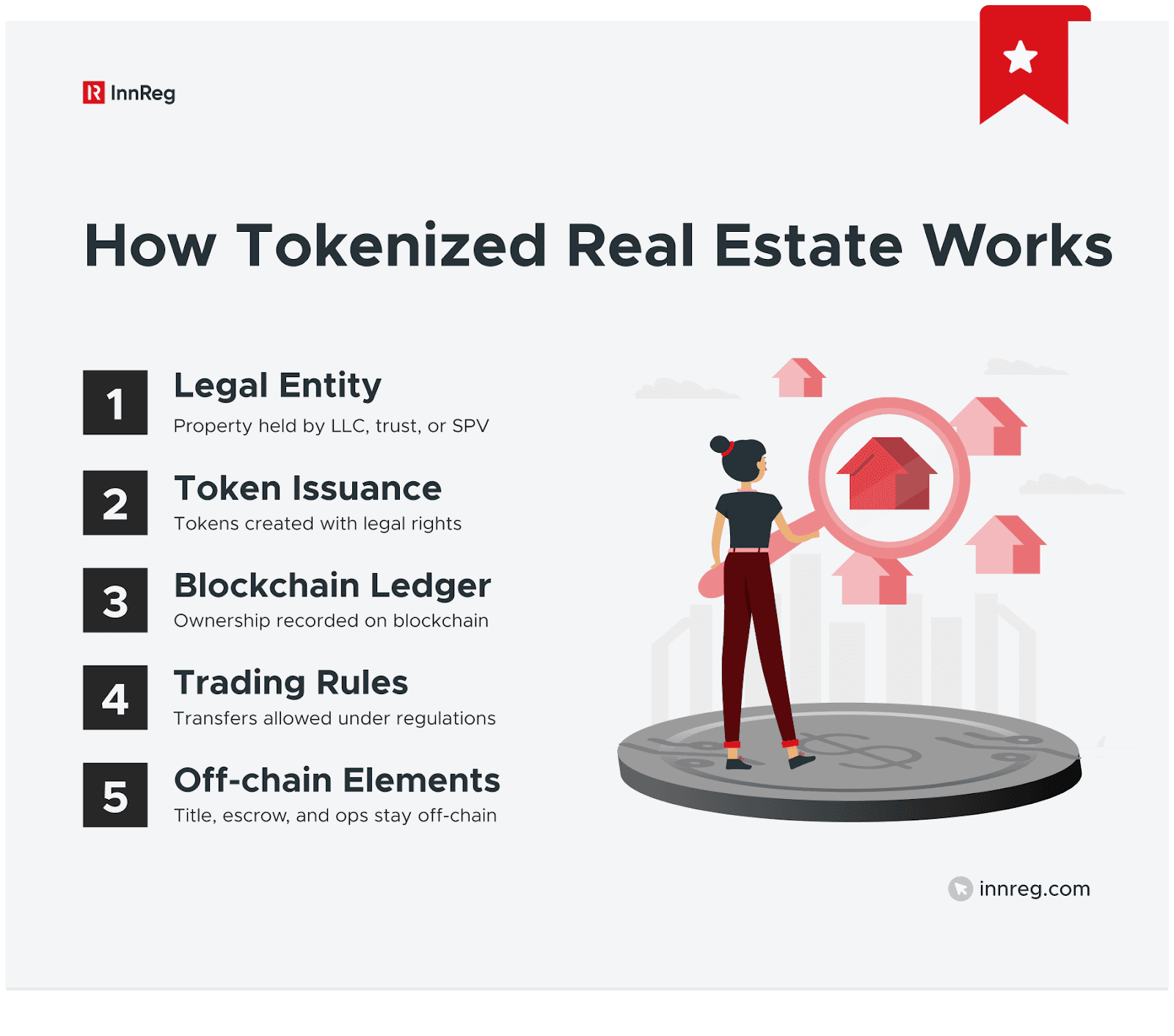
The first step is identifying a physical property that meets regulatory criteria. Not every building can be tokenized. The asset must have a clear title, stable cash flows, and a jurisdiction that recognizes digital securities. Platforms typically require the property to be held by a Special Purpose Vehicle (SPV) or a similar legal entity. This entity owns the property and issues the tokens, separating the digital shares from the physical asset. Without this legal wrapper, the tokens are merely speculative digital items, not regulated securities.
2. Smart Contract Development
Once the legal structure is in place, developers write smart contracts on a blockchain network. These contracts define the rules of ownership, including dividend distribution, voting rights, and transfer restrictions. The contract ensures that when a token is sold, the ownership record updates automatically. It also handles the automatic distribution of rental income to token holders. This step removes the need for manual accounting and reduces administrative overhead, but it requires rigorous security audits to prevent exploits.
3. Token Creation and Distribution
The platform mints the tokens, which represent fractional ownership of the SPV. These tokens are then offered to investors through a Security Token Offering (STO) or a secondary market listing. Investors must complete Know Your Customer (KYC) and Anti-Money Laundering (AML) checks before they can purchase. This verification is built into the smart contract, meaning only verified wallets can hold or trade the tokens. This compliance layer is what distinguishes tokenized real estate from unregulated cryptocurrencies.
4. Trading and Liquidity
After distribution, tokens can be traded on secondary markets or regulated exchanges. Unlike traditional real estate, which can take months to sell, tokenized properties can be liquidated in minutes. However, liquidity varies significantly by asset. High-demand properties in major cities like New York or London see more activity, while niche properties may have fewer buyers. Investors should expect some volatility in trading prices based on market sentiment and property performance.
5. Ongoing Management and Reporting
The final step is continuous management. The SPV handles property maintenance, tenant relations, and financial reporting. Smart contracts automatically distribute rental income to token holders, usually on a monthly or quarterly basis. Investors can monitor performance through a dashboard that shows occupancy rates, net operating income, and token price movements. This transparency is a key benefit of tokenization, providing real-time data that traditional real estate investors rarely access.
-
Verify the platform is registered with relevant financial authorities (SEC, FCA, etc.).
-
Confirm the property title is held by a separate legal entity (SPV).
-
Review the smart contract audit report for security vulnerabilities.
-
Check the minimum investment amount and fee structure (management, transaction).
-
Ensure you understand the tax implications of receiving crypto-based dividends.
Common Mistakes in Tokenized Real Estate
Tokenized real estate is still a niche market, representing less than 0.1% of the global property sector. Despite this small footprint, the errors that derail investors are well-documented. Many newcomers treat tokenization like a standard stock purchase, ignoring the structural and regulatory nuances that define these assets.
Assuming Liquidity Equals Instant Access
The most frequent mistake is believing that because an asset is "tokenized," it can be sold instantly. While blockchain technology enables faster settlement than traditional deeds, secondary markets for real estate tokens are often restricted. Many platforms impose lock-up periods or only allow trades during specific windows. Investors who need emergency cash often find their tokens illiquid, trapped by platform rules rather than market demand.
Overlooking Jurisdictional Restrictions
Another critical error is ignoring where the token is legally domiciled. Real estate is inherently local, but tokens are digital. A token representing a building in New York may only be legally tradable by accredited investors in the United States. Buying tokens on a global platform without verifying your eligibility can lead to frozen accounts or legal complications. Always check the offering memorandum for specific geographic and investor-type restrictions.
Confusing Ownership with Revenue Rights
Not all tokens represent equity. Some tokenization models issue "security tokens" that grant ownership, while others issue "utility tokens" or "revenue shares" that only provide a cut of the rent. Investors often assume they own a slice of the property when they only own a slice of the cash flow. This distinction matters significantly for tax purposes and long-term wealth building. If you want property appreciation, ensure the token grants actual equity, not just passive income rights.
Ignoring Platform Risk
Finally, many investors focus on the property but ignore the platform hosting the token. If the platform faces technical failures, regulatory shutdowns, or insolvency, your token may become worthless regardless of the building's value. Unlike a bank account, there is often no FDIC insurance for digital asset platforms. Due diligence should extend to the platform's security audits, legal compliance, and operational history.
Tokenized real estate 2026: what to check next
What is the tokenization trend in 2026?
The market for tokenized real-world assets (RWA) hit roughly $60 billion in 2026, spread across more than 7,000 products. Despite this growth, tokenized real estate still represents far less than 0.1% of the global property market. The sector remains heavily concentrated and restricted, with U.S. Treasuries currently leading the charge in institutional adoption rather than physical property.
Is tokenized real estate a good investment?
Tokenized real estate allows investors to receive passive cash flows proportional to their ownership stake. If you hold tokens representing 0.2% of a building, you receive that same percentage of the monthly rent. This structure mirrors traditional property ownership but offers greater liquidity and lower entry costs, though it still carries the risks associated with the underlying physical asset.
Where can I buy tokenized real estate?
You can purchase tokenized properties through specialized fractional ownership platforms. These regulated marketplaces allow you to buy and sell tokens representing shares in commercial or residential buildings. Most platforms require you to complete a KYC (Know Your Customer) verification process to ensure compliance with securities laws before you can access their inventory.
How is real estate going to be tokenized?
Tokenization involves creating digital tokens on a blockchain that represent ownership or economic rights to a property. The physical asset is legally structured so that the blockchain ledger serves as the official record of ownership. These tokens can then be traded, sold, or held by investors much like shares in a company, bridging the gap between traditional real estate and digital finance.
Put Tokenized Real Estate into practice
No comments yet. Be the first to share your thoughts!