
Market growth and institutional adoption
Tokenized real estate is moving from experimental pilot programs into mainstream capital allocation. The broader real-world asset (RWA) tokenization market has expanded rapidly, growing from $5.5 billion in early 2025 to $29.2 billion by April 2026. This fivefold increase signals that blockchain-based property ownership is no longer a niche concept but a scaling financial infrastructure.
Institutional and high-net-worth investors are leading this shift. Data indicates that by 2026, institutional investors plan to allocate 5.6% of their portfolios to tokenized assets, while high-net-worth individuals aim for 8.6%. Real estate remains the second most attractive asset class for tokenization among both groups, cited by 56% of institutions and 49% of HNW investors.
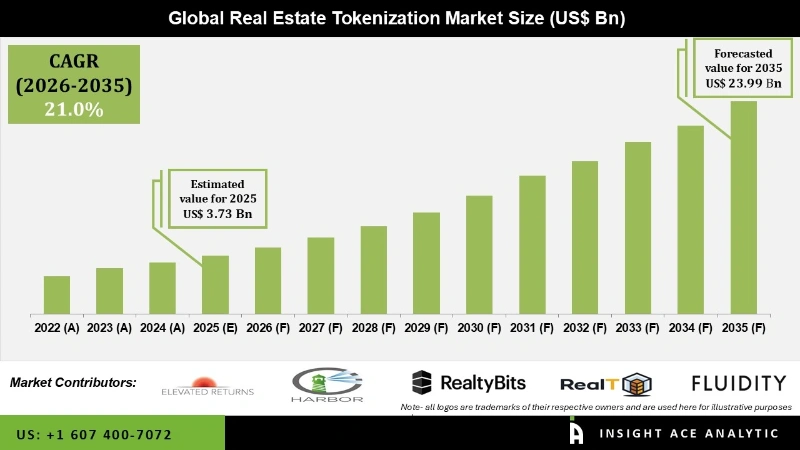
The long-term trajectory is equally aggressive. Forbes reports that tokenized real estate could grow from less than $300 billion in 2024 to over $4 trillion by 2035. This projection underscores the potential for tokenization to unlock liquidity in traditionally illiquid property markets.
To visualize the momentum driving this sector, the chart below tracks the performance of a leading Real World Asset ETF. This trend reflects broader market confidence in the digitization of tangible assets.
How fractional ownership works in 2026
Real estate tokenization converts property ownership or economic rights into digital tokens on a blockchain ledger. This process allows a single asset to be fractionalized into thousands of smaller units, each representing a share of the underlying property. Instead of buying a whole building, investors purchase tokens that track the value and cash flow of the real estate asset.
This shift turns traditionally illiquid assets into easily tradable instruments. On-chain marketplaces allow these tokens to be bought and sold with far greater speed than traditional real estate transactions. The result is a dramatic increase in accessibility, enabling a broader range of investors to participate in high-value commercial and residential properties.
Institutional adoption is accelerating this trend. By 2026, 56% of institutional investors and 49% of high-net-worth individuals cite real estate as their second most attractive tokenized asset option. This widespread interest is driving the projected growth of the tokenized real estate market from under $300 billion in 2024 to more than $4 trillion by 2035.
The infrastructure supporting this market is maturing. Platforms now offer seamless integration between legal compliance, property management, and secondary trading. This means investors can receive rental income distributions directly to their digital wallets and trade their positions without the months-long closing processes typical of traditional real estate.


As an Amazon Associate, we may earn from qualifying purchases.
Top platforms for tokenized real estate
The tokenized real estate market is maturing rapidly, shifting from experimental pilots to structured investment vehicles. By 2026, institutional investors expect to allocate 5.6% of their portfolios to tokenized assets, with real estate ranking as the second most attractive option behind only fixed income [1]. This shift has spurred a wave of specialized platforms designed to bridge the gap between traditional property ownership and digital liquidity.
Selecting the right platform requires evaluating regulatory compliance, asset quality, and liquidity mechanisms. Below is a comparison of leading platforms active in 2026, highlighting their distinct approaches to tokenizing real estate.
Platform Comparison
| Platform | Primary Asset Type | Minimum Investment | Regulatory Framework | Liquidity Model |
|---|---|---|---|---|
| RealT | US Residential | $50 | SEC Regulation A+ | Secondary Marketplace |
| Propy | Global Commercial/Residential | $10,000+ | Varies by Jurisdiction | Direct Transfer |
| Lofty AI | US Vacation Homes | $50 | SEC Regulation A+ | Internal Exchange |
| Zoniqx | Commercial Real Estate | $25,000 | SEC Regulation D 506(c) | Private Secondary |
Table: Overview of major tokenized real estate platforms in 2026. Data sourced from platform disclosures and market analysis.
RealT
RealT remains a pioneer in fractionalized US residential real estate. The platform tokenizes single-family homes across various US states, allowing investors to own fractions of properties for as little as $50. Each token represents a share in a Limited Liability Company (LLC) that holds the deed to the property. Investors receive monthly rental income distributed proportionally to token holders. RealT operates under SEC Regulation A+ exemptions, providing a layer of regulatory oversight. Its secondary marketplace allows investors to sell tokens, though liquidity can vary depending on market demand [2].
Lofty AI
Lofty AI focuses exclusively on vacation rental properties, primarily in high-tourism areas like Florida and Arizona. Similar to RealT, Lofty uses SEC Regulation A+ to offer fractional ownership with a $50 minimum. The platform emphasizes ease of use, with a user-friendly interface for tracking rental income and property performance. Lofty’s internal exchange provides a liquid secondary market, allowing investors to buy and sell tokens quickly. The platform also offers educational resources to help new investors understand the nuances of vacation rental markets [3].
Propy
Propy takes a broader approach, facilitating the tokenization of both residential and commercial real estate globally. The platform leverages blockchain technology to streamline the entire transaction process, from listing to closing. Propy’s minimum investment varies significantly depending on the asset, often starting at $10,000 or more. The platform operates under varying regulatory frameworks depending on the jurisdiction of the property. Propy’s focus is on transparency and speed, using smart contracts to automate many aspects of the transaction [4].
Zoniqx
Zoniqx targets the commercial real estate (CRE) sector, aiming to capture a significant share of the $500 billion tokenized CRE market by 2026. The platform focuses on ESG-focused offerings and multi-chain expansions. Zoniqx operates under SEC Regulation D 506(c), targeting accredited investors with a minimum investment of $25,000. The platform emphasizes institutional-grade assets and provides detailed due diligence reports for each property. Zoniqx’s private secondary market allows for the transfer of tokens among qualified investors [5].
[1] https://www.scnsoft.com/investment/tokenization-to-redefine-investing-in-real-estate [2] https://www.zoniqx.com/resources/top-real-estate-tokenization-platforms-in-2025-and-2026 [3] https://www.finextra.com/blogposting/31840/the-ultimate-guide-to-asset-tokenization-platforms-in-2026 [4] https://www.propy.com [5] https://www.zoniqx.com
Regulatory landscape and risks
The path to $3 trillion in tokenized real estate assets by 2030 is paved with complex regulatory hurdles. While the potential for liquidity is vast, the current legal framework remains fragmented across jurisdictions. Investors must navigate a patchwork of securities laws, anti-money laundering (AML) protocols, and know-your-customer (KYC) requirements that vary significantly from one region to another.
Compliance is not optional; it is the foundation of legitimacy in this space. Platforms must integrate robust identity verification and transaction monitoring systems to prevent illicit activity. Failure to adhere to these standards can result in severe penalties, platform shutdowns, or the freezing of investor assets. For institutional investors, who expect to allocate 5.6% of their portfolios to tokenized assets by 2026, regulatory clarity is a prerequisite for capital deployment.
The primary risk lies in the uncertainty of future legislation. As governments scramble to adapt existing securities laws to digital assets, sudden regulatory shifts can impact the value and tradability of tokens. This volatility is compounded by the technical risks inherent in blockchain infrastructure, including smart contract vulnerabilities and custody challenges.
To manage these risks, investors should prioritize platforms that are fully compliant with local regulations and offer transparent governance structures. Understanding the legal standing of the tokenized asset is as important as analyzing the underlying property’s financial performance.
Choosing the right tokenization platform
Selecting a tokenization platform requires looking past marketing promises to the underlying legal and technical infrastructure. By 2026, institutional investors expect to allocate 5.6% of their portfolios to tokenized assets, with real estate ranking as the second most attractive option for both high-net-worth individuals and institutions.
To navigate this growing market, you must evaluate platforms on three non-negotiable pillars: security, liquidity, and asset quality. A platform is only as strong as its weakest compliance link.
Verify regulatory compliance first
Regulatory alignment is the primary filter for any serious investor. Platforms operating in the US must comply with SEC regulations, particularly regarding the Securities Act of 1933 and the Investment Company Act of 1940. Ensure the platform conducts thorough KYC (Know Your Customer) and AML (Anti-Money Laundering) checks on all investors. Legitimate platforms will also provide clear documentation on how they structure securities, such as using LLCs or SPVs to hold the underlying real estate.
Assess secondary market liquidity
Unlike traditional real estate, tokenization promises liquidity, but this is not guaranteed. Investigate the platform’s secondary market infrastructure. Does it have a built-in exchange, or does it rely on third-party brokers? High liquidity depends on the depth of the buyer pool. Platforms like Zoniqx are expanding multi-chain capabilities to capture market share, but you must verify if there is sufficient trading volume to exit your position when needed.
Audit asset quality and transparency
The value of your tokens is directly tied to the physical property. Choose platforms that provide real-time data on property performance, including occupancy rates, rental income, and maintenance schedules. Transparency is key; look for platforms that offer dashboards showing real-time financials and legal documents. This visibility allows you to monitor your investment as closely as you would a direct property ownership stake.
Evaluate technology and security
Blockchain technology should enhance, not complicate, your investment. Ensure the platform uses established, audited smart contracts to manage token issuance and transfers. Security audits from reputable firms are essential to prevent vulnerabilities. Additionally, check if the platform supports multi-chain interoperability, which can reduce transaction costs and increase accessibility for a broader investor base.
Check fees and investor support
Hidden fees can erode returns over time. Compare management fees, transaction fees, and exit fees across platforms. Transparent fee structures are a hallmark of reputable platforms. Also, consider the level of investor support. Do they offer dedicated account managers or comprehensive educational resources? Good support can make a significant difference, especially for those new to tokenized real estate.
Frequently Asked Questions About Tokenized Real Estate
Is real estate going to be tokenized?
Yes. Institutional investors expect to allocate 5.6% and high-net-worth individuals 8.6% of their portfolios to tokenized assets by 2026. Both groups cite real estate as their second most attractive tokenized asset class, following only digital infrastructure. The global market for tokenized real estate is projected to reach $3 trillion by 2030, representing 15% of total real estate assets under management.
How does tokenized real estate work?
Tokenization converts ownership of a physical property into digital tokens on a blockchain. Each token represents a fractional share of the asset, allowing investors to buy and sell small portions of high-value properties. Smart contracts automate dividend distributions and enforce regulatory compliance, reducing the need for traditional intermediaries like brokerages or title companies.
What are the risks of tokenized real estate?
The primary risks include regulatory uncertainty, liquidity constraints during market downturns, and smart contract vulnerabilities. Unlike publicly traded stocks, tokenized properties may have fewer buyers during periods of low demand, making it harder to exit positions quickly. Additionally, the technology is still evolving, and legal frameworks vary significantly by jurisdiction.
Can I lose money in tokenized real estate?
Yes. While tokenization lowers the barrier to entry, it does not eliminate market risk. Property values can decline due to local economic shifts, interest rate changes, or physical damage. Token holders are subject to the same market forces as traditional real estate investors, plus additional risks related to the underlying blockchain technology and platform stability.
No comments yet. Be the first to share your thoughts!